
On the whole, funerals at St. Scholastica Monastery resemble a typical Catholic Funeral. We follow the Rite for Christian Funerals. There are, however, elements and actions added to that rite which make our funerals particularly our own and particularly Benedictine.
These rituals involve a rose, a lighted oil lamp, and the Rule of Benedict. The red rose signifies the fullness of the deceased Sister’s life lived in love and dedication. The lighted oil lamp symbolizes the wise virgin who has kept her lamp trimmed with oil. It also reminds us of the light of Christ that burns within each of us. Sister would have carried a similar lighted lamp at her Profession and Jubilee celebrations. The Rule symbolizes our common monastic vowed profession. It is the Rule which bonds us as Benedictine Monastics.
Upon the reception of the body those three objects are placed on the casket. Then the Prioress invites each Sister to come forward to pray before the casket using these words, “Remembering our baptismal unity and mindful of how Sister’s vowed monastic profession touched our life and bonded us as Benedict Sisters in this Community, we touch the Rule of Benedict and then bless ourselves with The Sign of the Cross.”
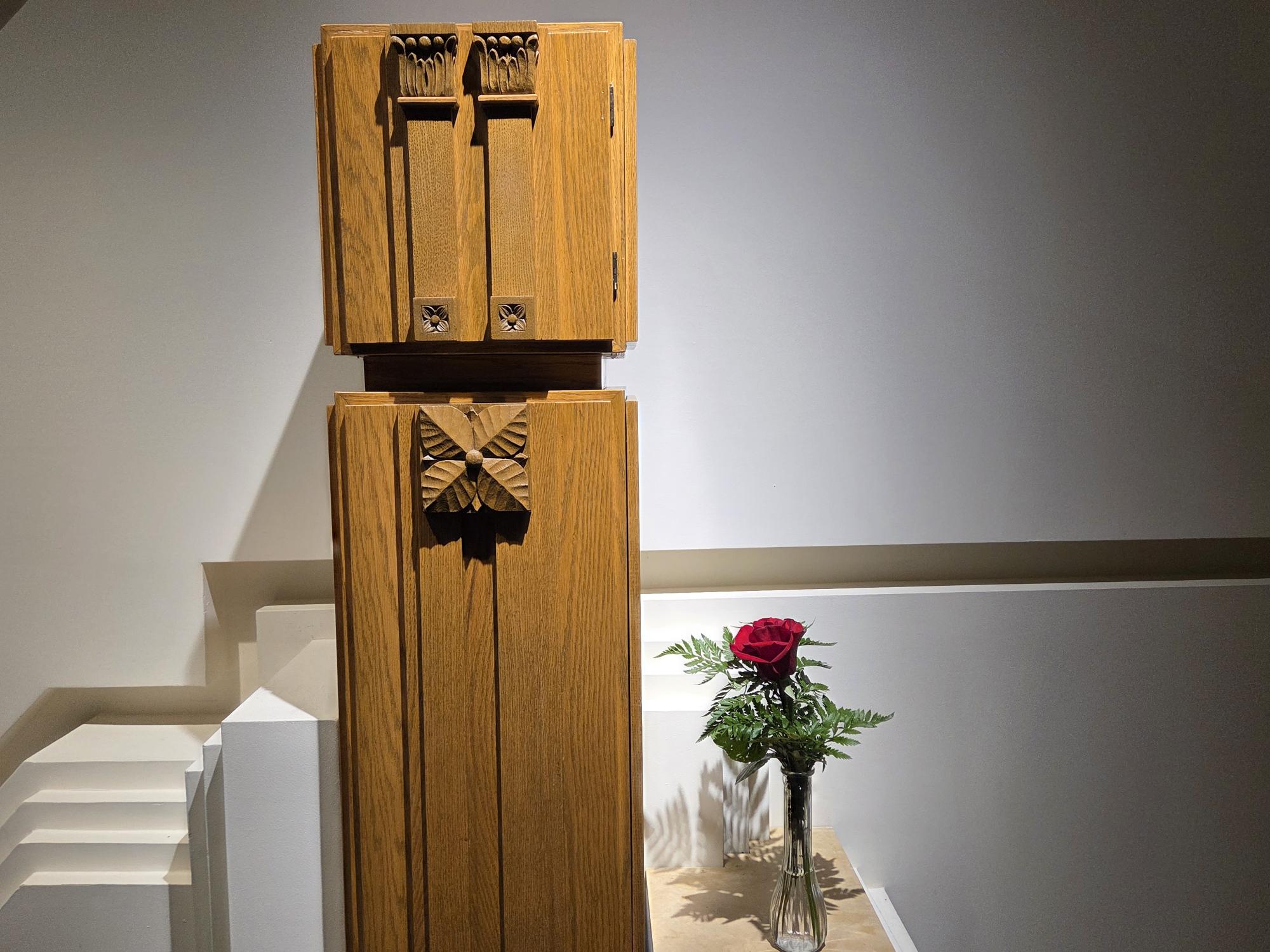
The rose, lighted lamp, and Rule of Saint Benedict remain on the casket during the funeral Mass. Near the conclusion of the Mass, the elements are solemnly removed. The rose which signified Sister’s life of service is taken to the Eucharist Chapel. The Rule is returned to its place enthroned in the Benedictine Chapel. The lighted lamp is extinguished symbolizing that Sister no longer “needs the light of a lamp, for the Lord God will give her light” (Rev 22:5).
More and more I value these rituals and elements. The extinguishing of the lighted oil lamp embodies the transition to eternal life. As someone who has a deep dedication to the Blessed Sacrament, I am profoundly touched by the placing of the rose before the tabernacle. It is a beautiful representation of how, in Religious Life, we give our lives and even our death, to Christ. I find the most poignant of all these rituals to be the touching of the Rule while praying before the deceased Sister. I can remember that I would not touch the Rule prior to being a professed member of Community. Even though there was no regulation against it, I did not think it was proper. Now, as a perpetually professed Sister this part of the ritual holds deep meaning.
The first time I experienced a monastic funeral, I was fascinated by the added ritual elements. After being in Community for almost twenty years, I have moved past simple fascination to deep appreciation. These symbols and ritualistic actions make real the inexpressible aspects of Monastic life and the connection to death. It comforts me to know that these rituals will be celebrated at the time of my death as they have been celebrated for over 100 years at St. Scholastica Monastery.